
Gail Owen and Terry Dalsemer: Terwilliger Plaza Members
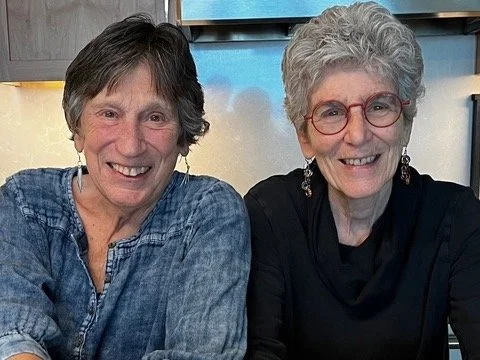
Gail Owen and Terry Dalsemer
Terwilliger Plaza Members
You are both from the east coast.
Gail: I grew up on the eastern shore of Maryland and spent most of my adult years in Baltimore. Terry was born and raised in Baltimore and lived there until we moved here to Portland in 2008.
Gail, you worked for the State of Maryland.
I was a Public Information Officer for the Maryland Secretary of Labor. I did many jobs in that capacity, including speechwriting, opinion editorials, newsletters and photography.
Terry: When I first met Gail, she told me she was working for the Department of Labor, Licensing and Regulation, and my eyes started to glaze over. And then I began to read some of the newsletters she was producing. It was fascinating.
Gail: This agency was the largest one in Maryland with offices across the state. The newsletter, the first online newsletter in the state system, targeted an internal audience to keep them informed. After 18 years however, I was fired when Maryland got its first Republican Governor. PIO’s had evolved into patronage positions. It’s not how I got the job – but how I lost the job. That’s when I decided to retire.
Terry, your career path brought you to psychotherapy.
After college I spent a year in India. When I came back to Baltimore, my intention was to only stay a short while and regroup. Almost immediately though, I became involved with the People’s Free Medical Clinic. I first began working as a coordinator, and among many tasks, I also ran the rap groups they offered to the community.
What is a rap group?
Long before hip hop became mainstream, at our clinic, rap group was the name of our drop-in groups to talk about whatever was going on in young people’s lives. It was informal but could be intense at times.
The clinic also started a weekly Women’s Night as part of a national initiative at free clinics which was a transformative moment in women’s health.
Women’s Night was a space to challenge traditional medical practices and address the specific health needs of women, offering reproductive and mental health services. It was women-centered, collaborative healthcare, focusing on empowerment, education, and mutual support rather than traditional, hierarchical medical models.
You were also the co-author of Women’s Night at the Free Clinic, recognized as a historical text within this broader women’s health movement.
The essay, which was published in Women: A Journal of Liberation, documented the development of feminist health activism and the creation of alternative health spaces in the early 1970s.
It was during this time when you became interested in counseling.
Yes, and I decided to go to Johns Hopkins Medical School for a graduate degree. It was a three-year psychiatric residency that didn’t require getting your medical degree first, so they called it a masters in mental health. A few years after graduating I established a private practice in Baltimore as a psychotherapist.
How did the two of you meet?
Terry: We met in a book group in Baltimore. I had been in this group long before Gail joined, but after my daughter was born, I stopped going. When my daughter was about seven, and the relationship with my partner had ended, I rejoined the book group. And there was Gail.
We discovered that we shared a love of swimming. I used to swim with a master’s swim club and knew that Gail also swam for exercise. My gambit in the book club was, “Hey, I am thinking of doing the open water swim across the Chesapeake Bay. Do you want to help me train for it?”
Gail: Right, and I said, “Are you nuts? Let’s go to the pool instead.”
Terry: She did talk me out of it. We began swimming at the local pool, and that’s how we got to know each other.
How long have the two of you been together?
Terry: It’s been almost 30 years, although we weren’t married until 2012.
We got married in New York City on our way home from Cuba after attending a Havanna Jazz Tour. Our attorney had told us that while gay marriage was not yet legal in Portland, federal recognition would likely happen within the next few years. If we got married in another state where it was legal, it would be an easy federal recognition process. About a week prior to our Cuba trip, Gail said – let’s get married in NYC. So, we did. Right in front of the Plaza Hotel.
Gail: It was right there by the Pulitzer Fountain where Zelda and F. Scott Fitzgerald would frolic. We chose the Plaza Hotel because the officiant we found lived in Brooklyn and she wanted a location convenient to the subway. She was an urban shaman with fiery red spiked hair. It was a memorable day.
What was behind the decision to move to Portland?
Terry: A dear friend and former business partner had moved out years before and I would come out and visit. Gail and I stopped in to see them on our way back from a trip to Papua New Guinea, and we loved it. We decided to come back the following December to see what winter was like because I always visited in spring or summer. We had so much fun. Our friends had just bought a house in a great wooded community, and we decided to look at some houses with their realtor. Then, we saw this one house and fell in love with it.
Gail: We bought the house in 2007 and moved in 2008.
Terry: We weren’t ready to move. We weren’t even thinking about buying a house. The plan was to rent it out for a few years and then, not long after we decided to move to Portland. At the time Gail’s son was in Hawaii and my daughter was in Chicago, so it seemed a good spot geographically.
What was your impression of the gay community here in Portland?
Gail: We weren’t really looking. It’s not the focus of our life.
Terry: I will say that the first year we went to the Gay Pride Parade, we were astonished by what we saw. Instead of your typical stereotypes, there were gay lawyers, gay policemen, gay doctors, and gay firefighters. It was quite special.
Gail: It was very affirming.
What influenced your decision to move into a senior living community?
Gail: Well, I thought we should opt for a beach house in Kauai instead, – that it would be a very nice way to spend our last years. But I got outvoted by a saner mind.
Terry: Here in Portland, for years I had volunteered for an organization that ran support groups for the aging population. I joined because I wanted to learn how to be old and soon recognized the importance of moving to a senior living community while you’re still young enough to meet people and build a community.
What did you learn about being old?
Terry: I learned a lot about paying attention to your health. When to begin to make decisions about future planning on a wide range of topics from downsizing to wills and advance directives. Or, when to know that you shouldn’t be driving. And a lot about grieving. Understanding all the things that you grieve as you age.
Why Terwilliger Plaza?
Terry: As an aging and hospice volunteer I had been to Terwilliger Plaza, so it was on my radar. When we began thinking about moving into a senior living community, all of a sudden being gay was an important factor in our decision making. We thought Terwilliger Plaza was the most progressive senior living community in town.
Gail: The other communities also felt more dispersed and suburban. We liked how the Terwilliger Plaza campus is connected through skybridges and is closer to the city. We moved into Parkview in December 2023 and have a beautiful view of the eastside, including Mount Hood and much of the Cascades.
Terry, going back to your earlier comments on aging, are there conversations here at Terwilliger Plaza about aging?
Before we moved in, I started a support group here, “Conversations on Aging”, similar to what I had been doing out in the community. It meets once a month and is an opportunity for people to talk with an open agenda.
After we moved in I also co-founded a group called “Mortality and Choices” with three other resident Members – a psychologist, a pastoral counselor and a former surgeon. We saw the need for people to start talking more about these issues. We host a monthly program where we bring in outside speakers. And then, later in the month we host a discussion to debrief about the speaker’s topic.
What has been the response in the community to this group?
Terry: We thought that for the first discussion we might get ten people to attend. We had over 80, and it continues to grow in awareness and participation.
Gail, do you have any groups or committees that you are involved with?
I am involved with the Artworks Committee. My undergraduate degree from Skidmore College was in Art History. Did you know that Terwilliger Plaza has almost 2,000 art pieces from prints to original works of art, and we add to it all the time? There are four exhibition spaces that change every three months.
What drew you to Terwilliger Plaza?
Terry: What stood out to me was Terwilliger Plaza’s representative self-governance structure with a majority of resident Members on the Board. That was very important to us. Yes, there is an administrative hierarchy and a process, but as resident Members, we have a voice and there are opportunities to effect change if needed, or support change.
None of us know about aging until we find ourselves actually aging. Input from resident Members is essential to a quality, supportive experience. The complexity of aging is constantly evolving.
Do you both still swim?
Gail: Terry does – and we both do water aerobics. A big selling point for us was that Terwilliger Plaza has a pool.
What surprised you most about Terwilliger Plaza?
Gail: The people I’ve met here are so interesting, and nice and available. It’s exciting. We also like the weekly Happy Hour in The Heights Cafe.
Terry: What surprised me is that I am easily intimidated by people’s credentials. Here, there are lots of credentials and incredibly accomplished people, and yet, nobody leads with that. Whatever we have done to establish our identities is long established. Moving here was all about connectedness and building community. We all have special skills and interests, but there is no status check. We are all equal. I didn’t expect that. It was a lovely surprise.